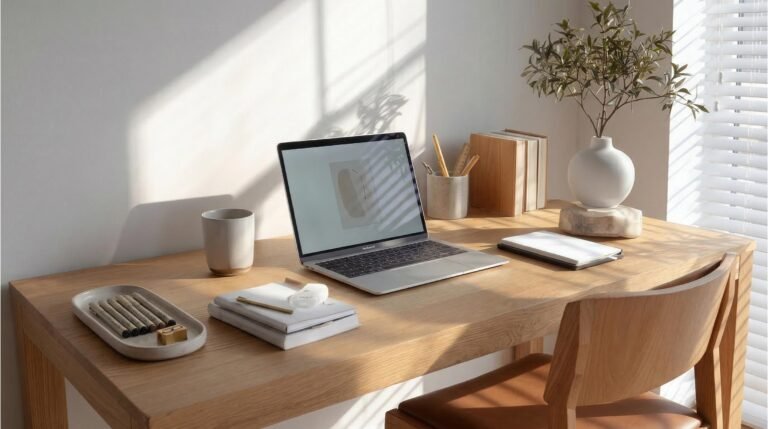
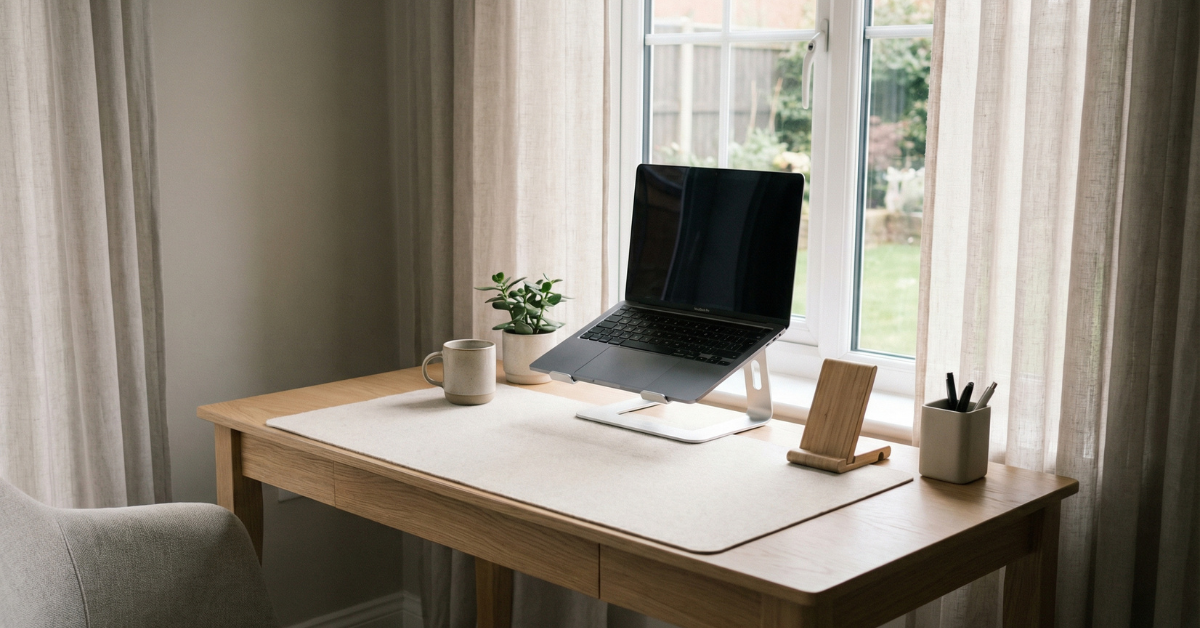
Can a Better Desk Setup Reduce Burnout?
The thing is, burnout doesn’t usually hit you all at once. It creeps up, hour by hour: the chair is ever so slightly less comfortable, your work surface a bit too cluttered, your desk setup just subtly working against what you’re trying to focus on without you even realizing it.
Hover your face over the puck of nothing, inhale the suck of insufficient power that has dragged from plug to charger and back across the wire; if you produce, teach or study in a tiny home this suck intensifies. When your desk serves double duty as a dining table, gaming station or the corner of a bedroom, focus is tenuous. And when objectivity slips, stress takes over.
The good news?
For that, it’s difficult to beat a desk setup tailored for focus, and there is no need for room-consuming excess. It requires smarter choices.
In the following guide, we’ll examine how compared to most desks a small space productivity desk setup can really fight mental fatigue, amp up your focus and expend some end-of-day high-energy release. We’ll also look at some focus desk accessories that might actually do the trick! Not things that show promise, but actual solutions.
Contents
- 1 Purpose of This Guide
- 2 Why We Lose Focus at the Desk (Especially in Cramped Spaces)
- 3 Small desks amplify every mistake:
- 4 Table Organization for Deep Focus in Tight Spaces
- 5 Ask yourself:
- 6 Establish Clear Zones (Even on a Tiny Desk)
- 7 Simple zoning approach:
- 8 Your Secret Weapon Is Vertical Space
- 9 Illumination & Ergonomics for Your Marathon Sessions
- 10 Ergonomics Without the Full Office Chair
- 11 Focus Desk Accessories That Really Do Helpp
- 12 1. Monitor or Laptop Stand
- 13 2. Minimal Desk Mat
- 14 3. Cable Management Tools
- 15 4. Phone Stand (Not Your Hand)
- 16 5. Focus Timer or Minimal Clock
- 17 Noise and Distraction Management in Tight Spaces
- 18 Sound Control Doesn’t Mean Silence
- 19 Visual Distraction Control
- 20 How a Small Place Desk Setup Will Create Less Burnout in the Long Run
- 21 List of the Full Focus Accessories
- 22 Conclusion: Time to Get Small, Notice the Difference
Purpose of This Guide
The point of this guide is to enable you to fix the hidden flaws in your desk setup that quietly sap focus and energy (if not shortening your life) every single day. If your workspace feels distracting, uncomfortable or mentally exhausting, this guide tells you where those problems originate, and how the right desk accessories can fix them. And you will see how improvements in lighting, input tools and organization can make work feel easier and more comfortable right away.
Along the way, you’ll spot our curated suggestions for ambient desk lamps, ergonomic keyboards and mice, desk organizers and even some focus-friendly accessories that are meant to help eliminate distractions at the source. There’s a reason everything is in there: to help you stay focused longer, minimize fatigue and confidently select desk essentials that can actually change how your day feels.
For our problem-aware readers, the ones who feel tired, distracted or overwhelmed at the desk, even if they can’t explain exactly why.
If you’re:
- Working out of a bedroom or small apartment
- Hitting the books at a cramped desk
- Browsing anything ergonomic or cool for your tech desk
This guide should help you address the true sources of burnout and naturally steer you toward smart, practical upgrades.
These desk enhancements end your distractions at the source.
Feeling unfocused and mentally fatigued at your desk is not your fault, it’s your setup. Make a few small adjustments that strip away hidden stressors, and your day will be infinitely more enjoyable.
👉See how to fix it now
Why We Lose Focus at the Desk (Especially in Cramped Spaces)
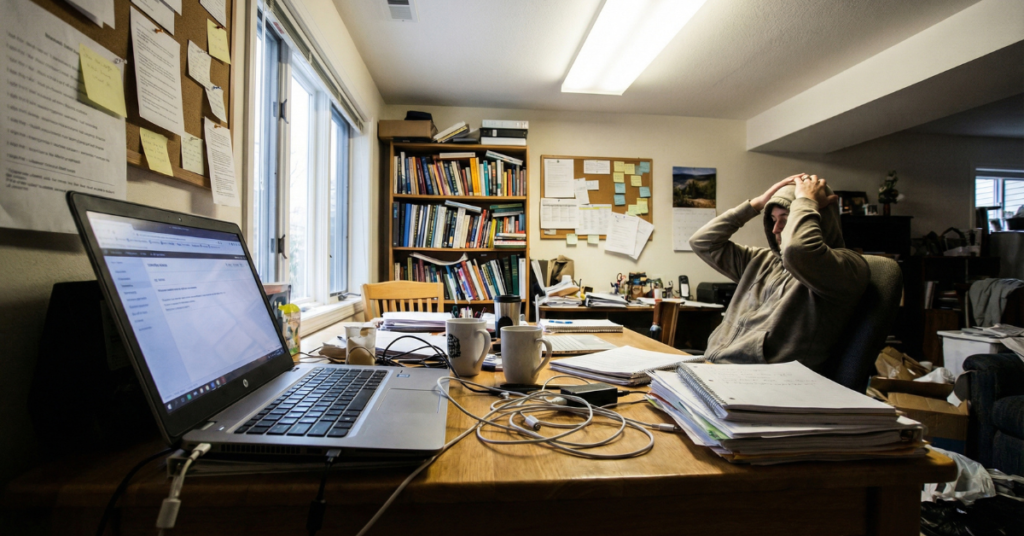
Focus seldom fails due to laziness or lack of discipline. More usually, it silently creeps away, nudged aside by small environmental frictions that accumulate over time (especially in cluttered desk environments). Your eyes will be directed all over when your workspace is cluttered. Cables disentangle into your peripheral vision, harsh lighting strains your eyes, and things you don’t really even want take up the surface. Even if you think you’re good at controlling or cancelling them out, your brain works in constant concert with these signals. In addition, poor posture, screen glare, and noise generate a low-level stress that depletes mental energy more quickly than most people are aware.
There’s no buffer zone in constrained spaces; distractions hover inches from your work. The effect is that you feel frequently mentally tired, have shorter windows of focus, and are often tempted to check your phone or step away, not because the work is challenging but because the ambient world has turned against you.
The vast majority of us like to blame ourselves when we cannot concentrate. We believe we don’t have discipline, motivation, or willpower. In fact, it tends to be the one around your desk.
Small desks amplify every mistake:
- Visual clutter feels overwhelming
- Bad lighting makes your eyes tired, faster
- And poor ergonomics tire your body faster
- Noise becomes harder to escape
Your brain is programmed to always look for a threat, and for distractions. When your work space is telling you “too bright,” “too cramped,” “uncomfortable” this stimulates the nervous system to stay on alert, not settled in and focused.
Over time, this leads to:
- Faster mental exhaustion
- Shorter attention spans
- Irritability and decision fatigue
- Relentless desk escapism
Burnout isn’t always about overwork.
(Rarely is it about working with the wrong people; usually, it’s more about working in the wrong conditions.)
Focus never gets an opportunity to stand a fighting chance when your desk is constantly nagging in 5 different directions. A couple of quick lay out and comfort fixes to eliminate those distractions before burnout.
👉 Begin with desk upgrades that minimize mental noise at the source.urce.
Table Organization for Deep Focus in Tight Spaces
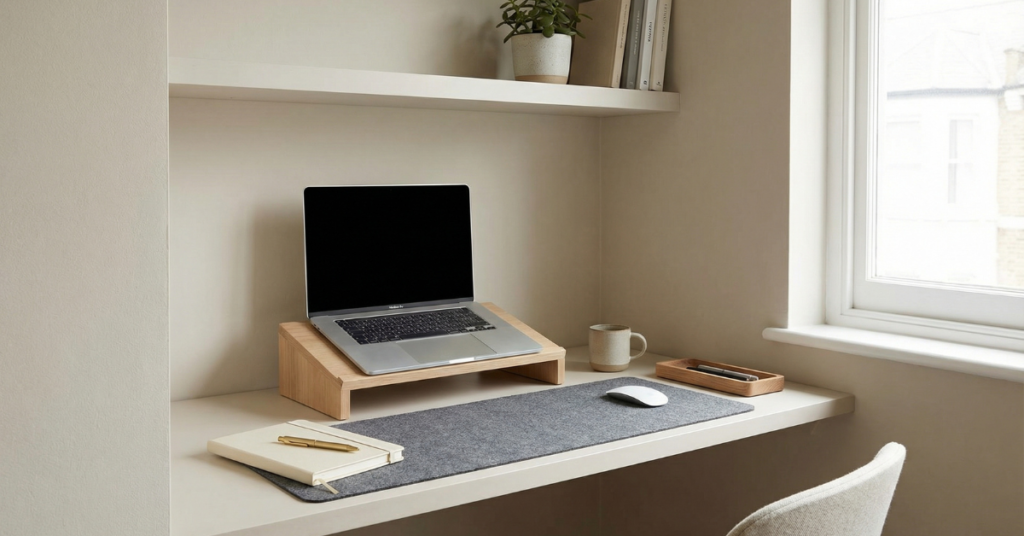
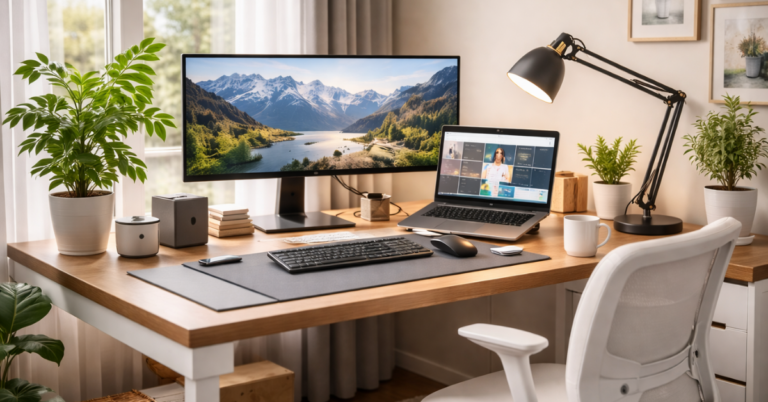
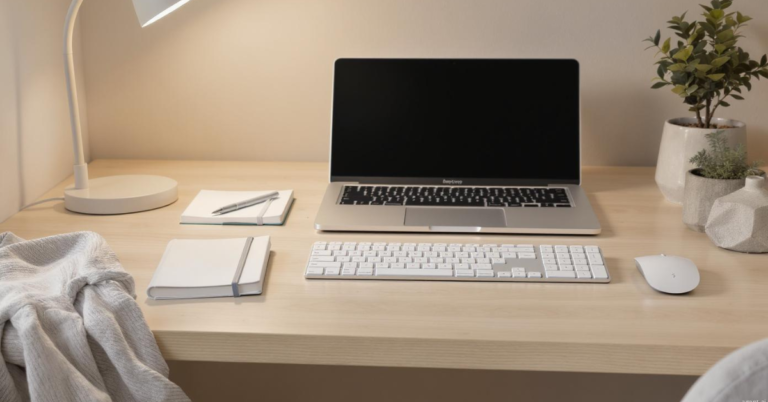
Laying out a desk for deep focus in a small space isn’t so much about cramming more in as being deliberate about what stays visible. In a crowded space, every object is fighting for your attention; therefore you want to cut down on visual noise before it becomes mental noise. Begin by establishing your layout around one obvious work zone, the space in front of you where your keyboard, mouse, or notebook is. This area should have an open and not cluttered feel. This is where the items you use all day live; anything else moves to the edges or gets banished from the desk. In small spaces, vertical thinking is just as important as horizontal space.
Monitor risers, wall-mounted shelves, or sleek storage tidy up your desk surface and keep supplies easily accessible. The cable management game is also a lot more important than most people realize, lazing wires pull focus horizontally, but wires hidden away make the desk feel cleaner and more deliberate. The clearer the center of your desk, the more measured its waves of spacing, the less mental space is demanded to remain focused at your work, and achievergasm becomes easier to enter and sustain.
A distraction-free desk setup begins with layout, not products. Before purchasing anything, address how your desk is set up.
Golden Rule: Empty what you don’t use daily
In tiny spaces, all of a thing has to vie for the spotlight.
Ask yourself:
- Do I touch this every day?
- Is this a tool that helps me with the number one task I need to get done?
- Does it earn its space?
If the answer is no, it does not have a place on your desk.
If your desk is cluttered, the same may go for your mind. Smart organization tools make your space feel more intentional without having to trade up for that larger desk.
👉 Find desk organizers for the focused among us, not the distracted.
Establish Clear Zones (Even on a Tiny Desk)
Your brain loves structure. Even a 100cm desk can feel organized if zones are unambiguous.
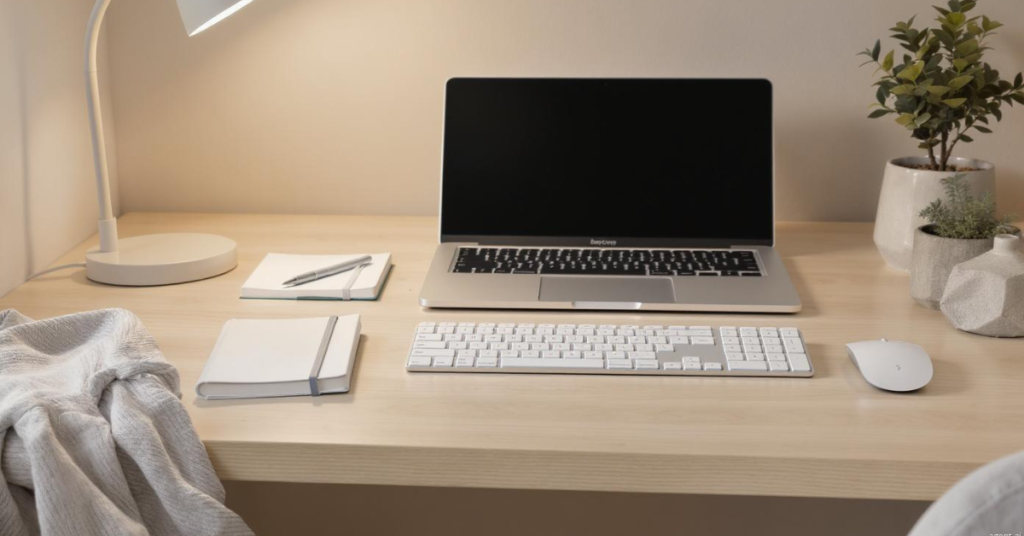
Simple zoning approach:
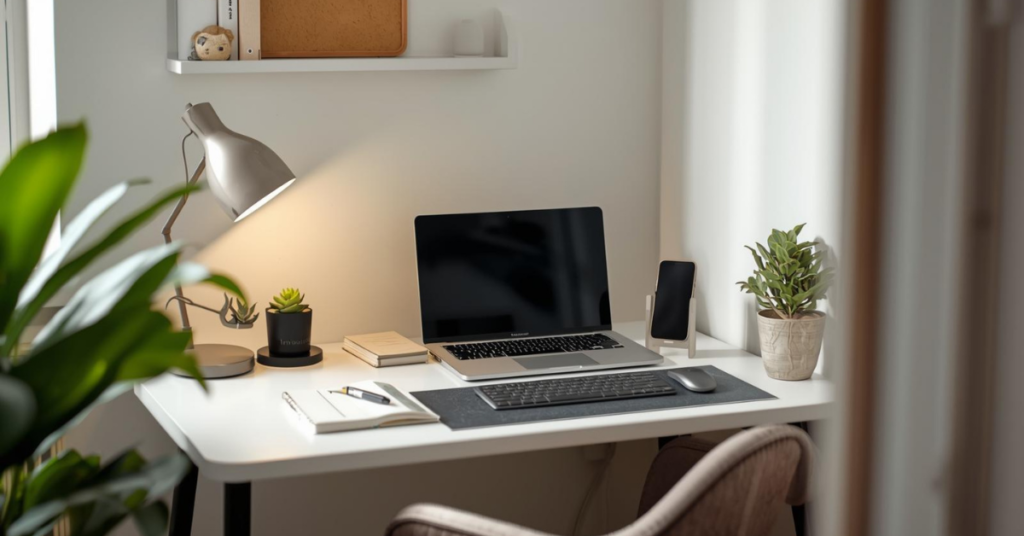
- Center (primary) Laptop or monitor
- Dominant side: Mouse, notebook, pen
- Secondary side: Phone stand, lamp, drink.
- Off desk: Storage tray or drawer for extras
This reduces decision-making friction.
Hands move automatically. Your mind stays calm.
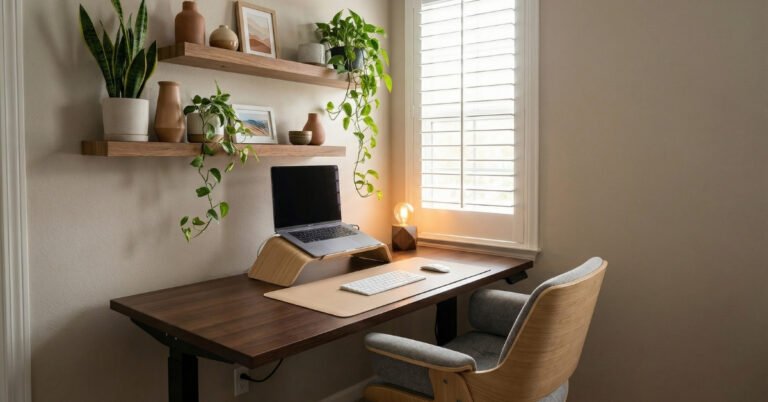
Your Secret Weapon Is Vertical Space
When laying out is not an option due to lack of surface space, go vertical:
- Monitor risers with storage
- Wall-mounted shelves
- Pegboards for tools or headphones
This leaves your workspace free and open for breathability, which is ideal for those extended sessions.
Clear zones minimize decision fatigue and allow your brain to transition into work mode more quickly. The perfect desk accessories will help you do this, even on the most cramped surface.
👉 Discover tools to aid in shaping work zones without letting them take up excess space.
Illumination & Ergonomics for Your Marathon Sessions
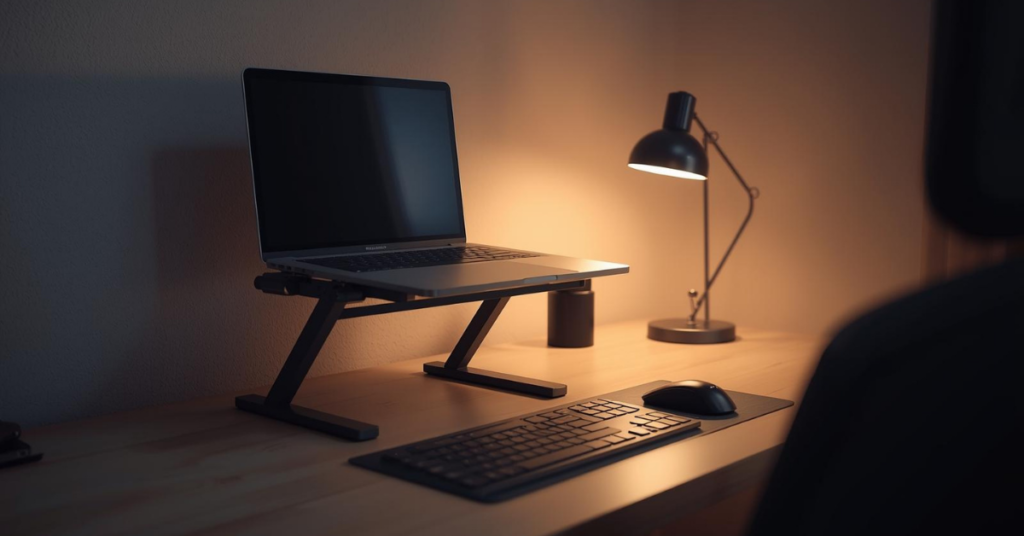
That is where most productivity desk setups falter. Lighting and ergonomics quietly determine how long you can focus before your body and brain begin to resist. Bright overhead lights or dim, uneven lighting make your eyes work harder than they need to, which can bring on head pain, eye strain and tiredness by getting you through half the workday. Draft with a soft ambient desk lamp slightly off to the side of your dominant hand and you’ll get perfect, shadow-free illumination that adds up to make even marathon sessions feel significantly more comfortable.
Ergonomics function in much the same way: Bad posture may not be painful right then, but it gradually saps energy away from your work. Pose-Perfecting / The right keyboard and mouse allows an ergonomicly friendly, neutral wrist, while your screen (at eye Level) from properly sat positioning can remove neck tension you realize you might not know you have. At the point that lighting and ergonomics are dialed in, your desk ceases to require regular physical adjustments, rather than shifting constantly in a manner that forces you to stop thinking about your task and focus on discomfort.
YYou can have the best tools in the world, but if your body is fussy, focus won’t stick around.
Lighting: Calm Beats Bright
Bright light causes your eyes to tire and your brain to become fatigued more quickly than you might think.
Ideal for small spaces:
- Soft, diffused desk lamp
- Neutral or warm light (4000–5000K)
- SIDE NOT TOP LIGHT JNICALL invokingState
Avoid:
- Bare overhead bulbs
- Harsh blue late afternoon light
- Directly reflected light from your screen
Good lighting doesn’t shout.
It quietly supports your focus.
Ergonomics Without the Full Office Chair
You don’t need a huge chair to have good posture.
Little changes, big impact:
- Laptop stand to elevate screen to eye level
- External keyboard and mouse
- Compact lumbar cushion
- Footrest (even a box works)
These changes help to relieve the tension in your neck, shoulders and lower back, all normal burnout instigators.
By keeping your body supported, you can also keep your mind engaged longer.
You can spend hours in front of a computer, and before you know it, strain your eyes and slouch your back without even realizing it. Basic ergonomic enhancements can keep you focused for hours.
👉 Step up your lighting and posture game with small-space ergonomic essentials.
Focus Desk Accessories That Really Do Helpp
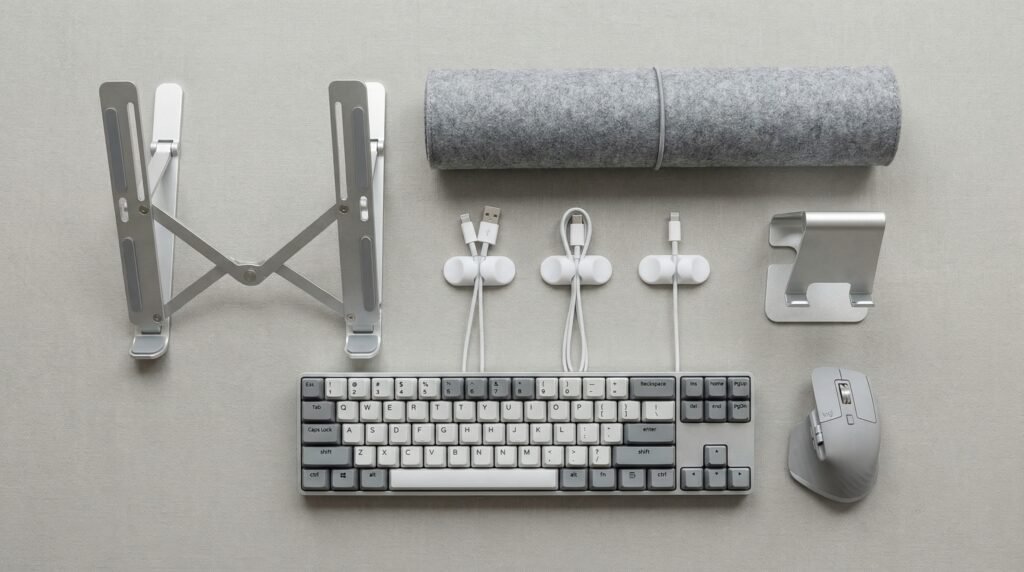
Not all accessories improve productivity.
Others are simply Instagram-worthy.
Focus desk accessories only work if they solve a real problem, not if they just add shit to your desk. But the accessories that truly do help are those that quietly strip away friction from your workday. An ergonomic keyboard and mouse cuts down on strain, so your body isn’t demanding breaks all the time.
Eye protection ambient desk lamp can help you to reduce eye strain and maintain your focus on the project in front of you, with soft light that won’t hurt your eyes. Noise-cancelling headphones also manipulate sound environment, and human behavior, particularly in shared or small spaces, insulates the brain to focus on just one task at a time. Even rudimentary tools like an ultra-sparse timer or clutter-free desk organizer can help by creating a clear rhythm to your work and minimizing visual chaos. When selected intentionally, those accessories do not vie for attention; they protect it. All of that support is going to lead to longer focus sessions, less mental exhaustion and a desk that works with you rather than against you over time.
Let’s concentrate on tools that address real problems.
1. Monitor or Laptop Stand
It’s one of the best returns on investment for upgrades.
Benefits:
- Better posture
- Less neck strain
- Extra storage underneath
- Cleaner visual layout
In smaller spaces, a stand can serve as a substitute for a larger desk.
2. Minimal Desk Mat
A desk mat:
- Defines your work zone
- Reduces visual clutter
- Improves mouse control
- Protects surfaces
Choose neutral colors. Believe it or not, loud patterns are more distracting than you realize.
3. Cable Management Tools
Loose cables create subconscious stress.
Simple fixes:
- Cable clips
- Under-desk cable tray
- Velcro ties
When your desktop is calm, so is your brain.
4. Phone Stand (Not Your Hand)
Phones are distraction magnets.
A stand:
- Maintains visibility but keeps phone out of the way
- Reduces constant grabbing
- Aids in purposeful use (timers, calls)
Place it just out of your reach to prevent mindless scrolling.
5. Focus Timer or Minimal Clock
Time awareness helps prevent burnout.
Use:
- Pomodoro timers
- Minimal digital clocks
- Simple analog timers
Stay away from smart devices that ask for notifications.
Not everything you put on your desk will make you immediately more productive; some just look nice. The best focus-friendly tools are ones that solve actual problems and keep distractions at bay.
👉 Buy desk accessories that focus your attention and earn their spot on your desk.
Noise and Distraction Management in Tight Spaces
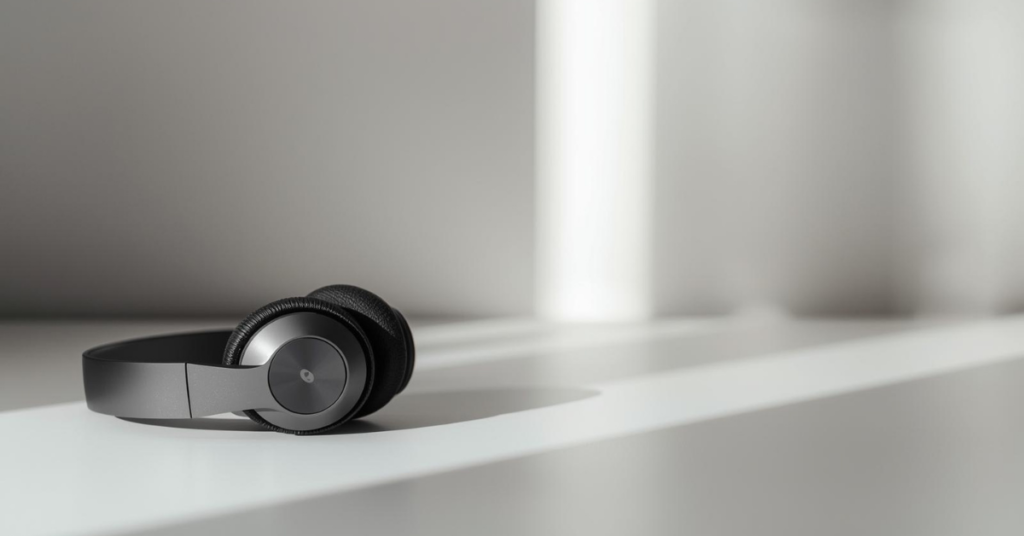
Noise is like the nuclear bomb of focus-killers (if you don’t live alone). In confined areas, noise and visual distractions are not just background sounds, they become the main event. When your desk is only a few feet from a window, a hallway or co-workers every sound and movement vies for your attention. The aim is not silence; it’s control. Basic tools, like noise-cancelling headphones or soft background sound can help to prevent sudden distractions without necessarily isolating you.
Visual distractions count too. Exposed wires, jumbled surfaces and chaotic walls are always tugging your eyes away from the job at hand, even when you’re not aware of it. Which is why clean porn cable management, clear desks and thought-through decor decisions can make such a difference. In a tiny workspace, mitigating distractions at the source is far more effective than attempting to “power through” them, and once your environment isn’t working against you, staying focused suddenly gets a lot easier.
Sound Control Doesn’t Mean Silence
Absolute silence can feel uncomfortable.
And so what you’re after is even sound.
Options that work well:
- Noise-canceling headphones
- White noise or brown noise
- Low-volume instrumental music
Consistency matters more than volume.
Visual Distraction Control
Small spaces often include:
- Beds
- Closets
- TV screens
- Busy walls
Try:
- Wall desk instead of room.
- Neutral background behind your screen
- Basic divider or curtain if necessary
Out of sight is really out of mind.
The most minuscule apartment can seem unbearable when work is constantly disrupted by noise and clutter. Noise-canceling headphones, white noise and plain visual barriers help keep me focused and at ease. Find the best products for an efficient small workspace free of distractions.
👉 Find apps that can block out distractions without leaving you alone.
How a Small Place Desk Setup Will Create Less Burnout in the Long Run
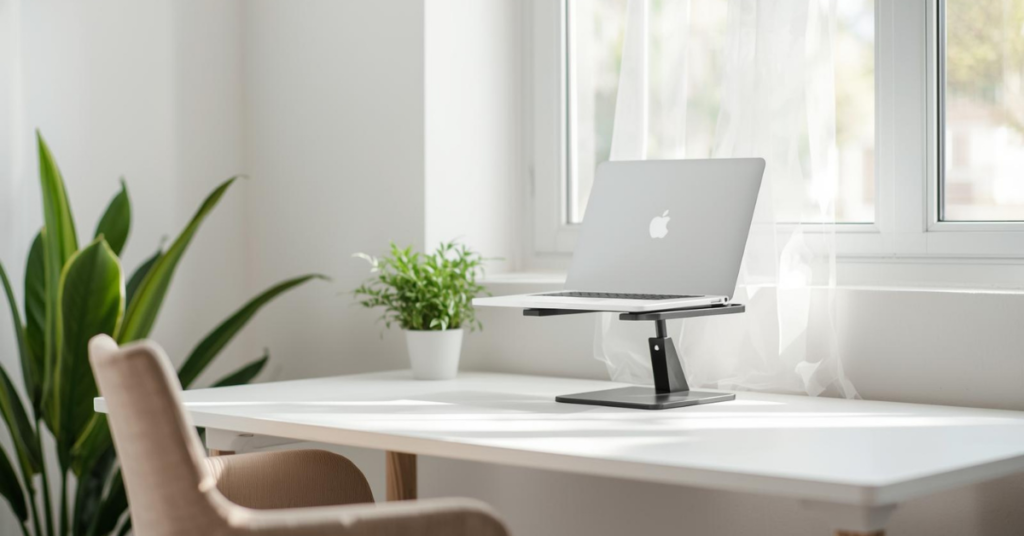
Burnout isn’t fixed in a day. But the right environment keeps it from constructing. A compact desk setup over time becomes a burnout-reducing mechanism, because it requires you to make intentional choices about what stays in your line of sight, and what doesn’t. When you have a small desk, everything on it either facilitates your work or competes quietly for your attention. The premise of a good setup is to eliminate that constant low level friction.
With less visual clutter, your brain has to expend less effort on filtering out noise, which in turn reduces mental fatigue over long work sessions. Setups that are ergonomically sound help to prevent overexertion, with gentle lighting and soothing devices deterring the tense oversaturation that seems to build slowly throughout the workday. Over weeks and months, this has more of an impact than any single productivity hack. Rather than pushing through the soreness, you create an environment for steadier focus, improved posture and seamless transitions between tasks. Burnout doesn’t just go away overnight, but a well-considered small desk setup slows the drain, making work feel more sustainable and less draining mentally over time.
Here’s what improves gradually:
- Longer focus sessions
- Less mental resistance starting work
- Fewer aches and headaches
- Happier mood while at work and on subsequent days
Productivity desk setup is not a productivity forceman.
It takes the friction out, it makes focus feel easy.
These desk improvements get rid of bothersome distractions at their source.
List of the Full Focus Accessories
And if you desire a full, curated list of ergonomic and tech accessories that fit great in small spaces, see our comprehensive guide here:
👉 Desk Accessories for Small Spaces to Focus & Be Productive
This pillar guide covers:
- Budget-friendly picks
- Compact ergonomic tools
- Tech accessories worth buying
- Beginner-friendly recommendations
Burnout is not just mismanagement of hours, it’s being in a working environment that fights your attention, constantly. A small-state desk setup with good ergonomics, organization and supportive accessories preserves energy throughout the day, sustains attention and helps you feel better at the end of a long workday.
👉 Design a small-space desk setup for focus, comfort and longevity.
Conclusion: Time to Get Small, Notice the Difference
Before you even get to the point of considering how to work harder or longer, it can be useful to take a hard look at the space where that work takes place. If your desk feels cramped and uncomfortable, if it looks visually noisy, you are fighting friction before you begin. In small doses, those little annoyances build up quickly and rear their heads in the form of burnout.
The benefits of the right desk upgrades don’t come from some mysterious quantity of discipline that they bestow upon us, rather, these investments remove resistance. Because when your monitor’s at the right height, lighting feels comforting and not hostile, and essentials are within arm’s reach, it becomes easier to hold onto focus. Which is why smart, compact desk accessories aren’t indulgences; they’re functional tools that shield your energy, and help make each day’s work just a bit more manageable.
You don’t need a new room.
You don’t need expensive furniture.
Start with:
- Clearing your desk
- Improving lighting
- Raising your screen
- Reducing noise and cables
Each small upgrade compounds.
And a better desk setup won’t just make you more productive at work.
It’ll change how you feel about it.
Ready to get your focus back and stop letting your desk suck the energy out of you? Begin small, begin smart — clean up your clutter, improve the lighting and enhance your set-up with tools that actually work. See our comprehensive guide on small space desk accessories for focus and productivity and get your hands (finally) on your workspace:
👉 Tech Accessories for Small Space Desk Setup to Help Get in the Zone For Work & Study.
Still deciding? Read this Tech Accessories Pillar Tutorial.